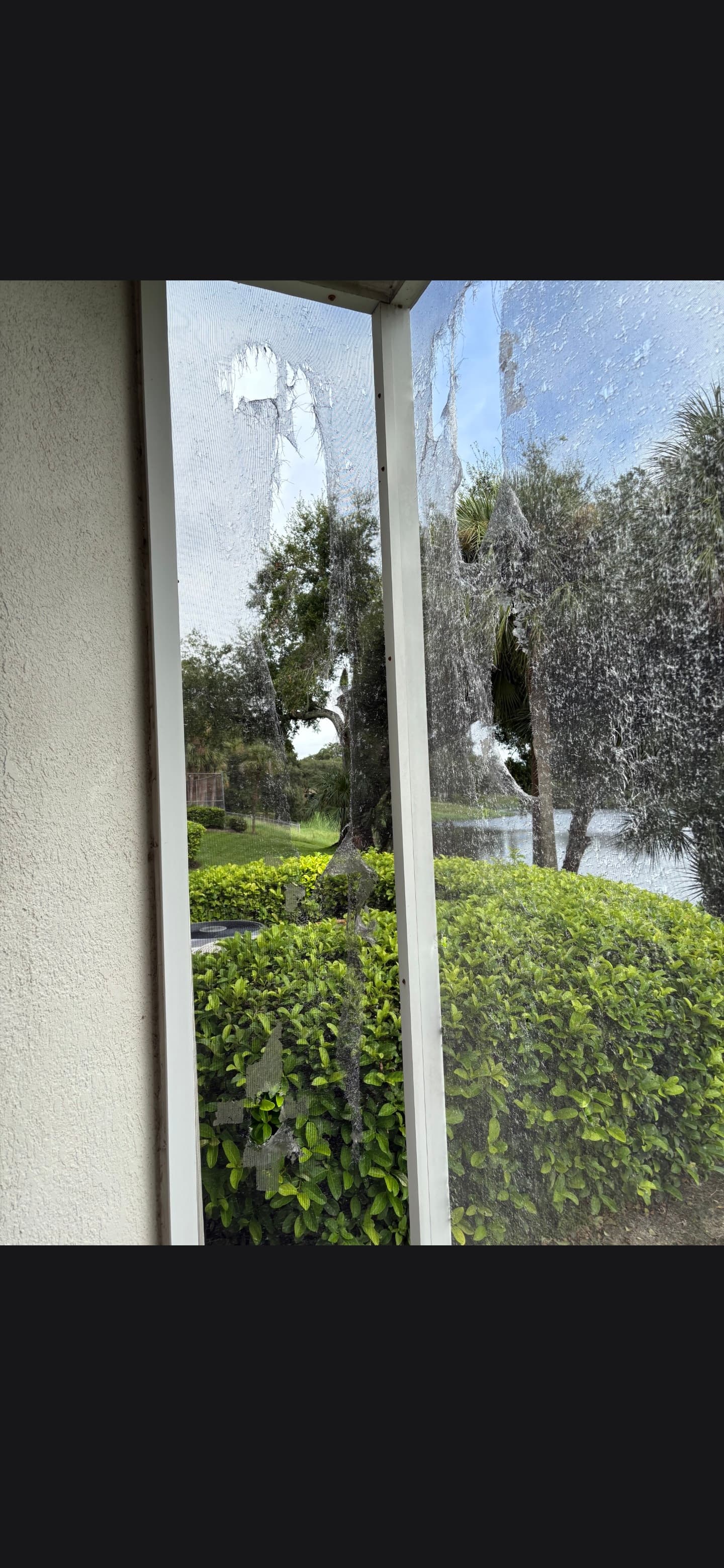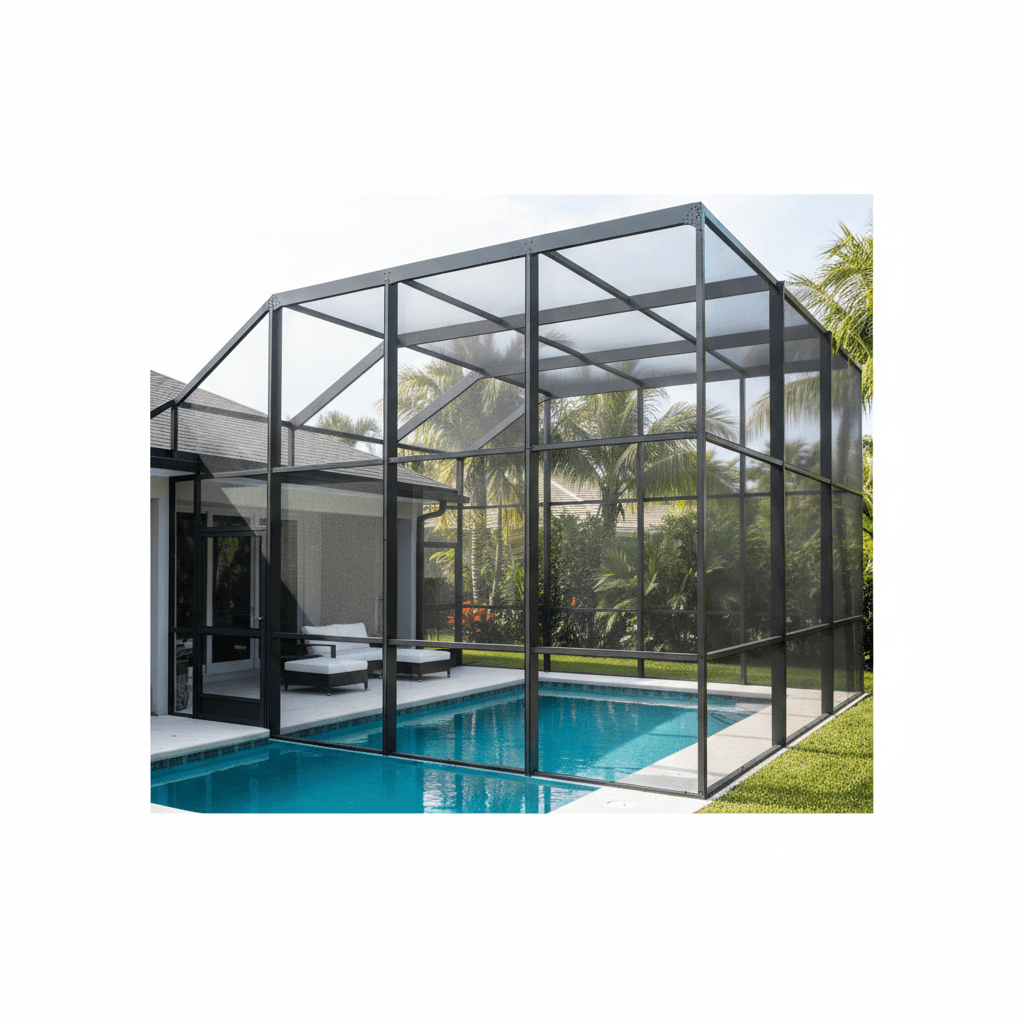
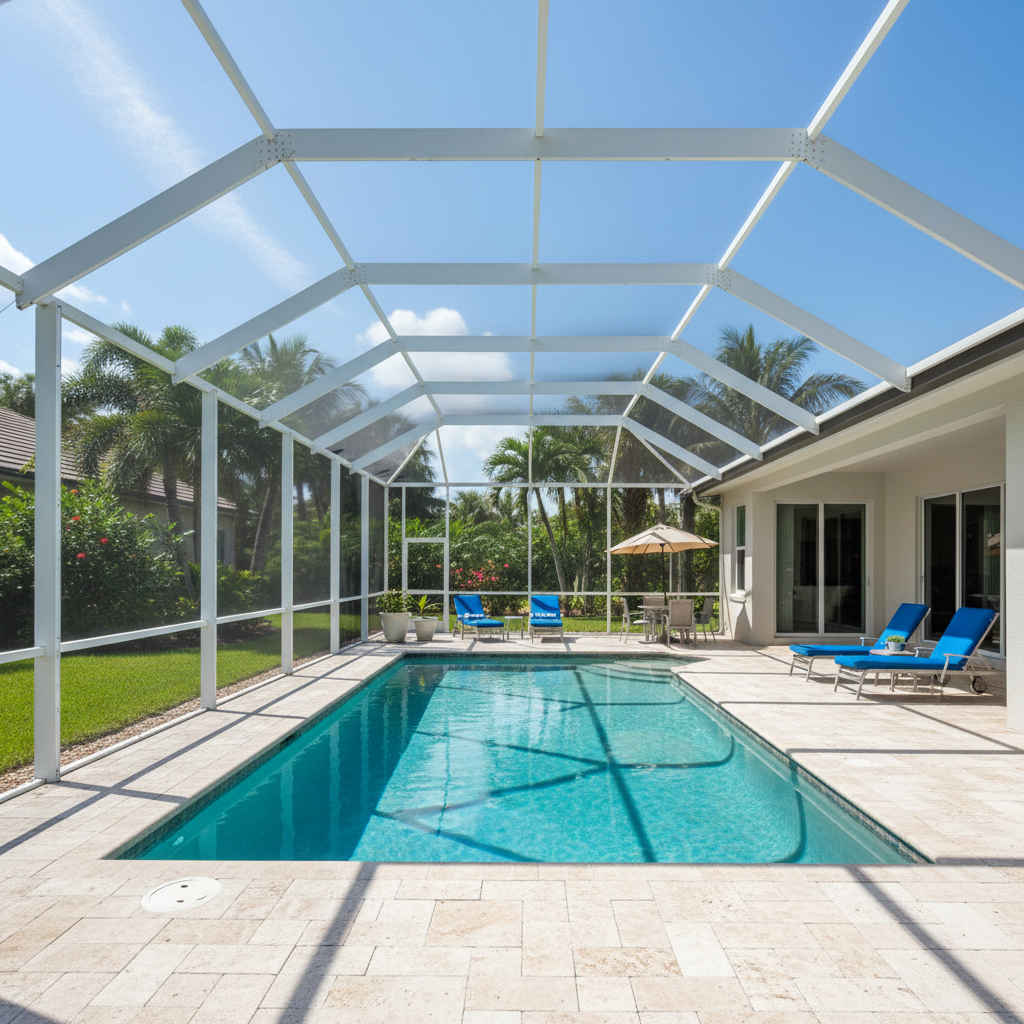
Effective pool enclosure hurricane preparation Florida requires inspecting structural fasteners for corrosion, clearing debris from gutters, and securing all loose patio furniture. Homeowners should also consider removing specific screen panels or cutting small openings to allow wind to pass through; this significantly reduces the risk of the entire frame collapsing under intense pressure.
In Florida, the sound of a tropical storm warning creates a specific type of anxiety for homeowners with pool enclosures. Watching your aluminum frame vibrate as wind speeds climb serves as a stark reminder that these structures are uniquely vulnerable to the elements. For residents in Central Florida, waiting until a hurricane is already on the horizon is often too late to address the structural integrity of your cage. Proactive maintenance is the only reliable way to ensure your investment survives the season intact. This guide provides a professional repair first checklist focusing on essential hardware inspections, screen tension, and door security. We will also address the critical debate regarding cutting screen panels and identify exactly when you need a professional inspection to safeguard your outdoor living space.
Understanding Hurricane Risks for Central Florida Pool Cages
Homeowners in Orlando and Winter Park often feel a false sense of security because we are located inland. While we do not face the devastating storm surges seen on the coast, pool enclosure hurricane preparation Florida requires a specialized approach due to our unique environment. In Central Florida, the primary threats are high velocity wind gusts and the dense canopy of Live Oaks and Pines that characterize neighborhoods like College Park and Tuskawilla.
Even a structurally sound enclosure can experience catastrophic failure if minor maintenance issues are ignored. A critical concept to understand is the sail effect. A pool cage is engineered to distribute wind pressure evenly across its surface. However, if a single screen panel becomes loose or partially detached, the wind can catch it like a sail. This concentrated pressure causes the entire aluminum frame to twist and torque, potentially pulling anchor bolts out of the deck or buckling the structural purlins. Because our local landscape often features mature trees, falling debris can easily puncture a screen or dent a structural beam, creating the initial opening that leads to total cage failure. Addressing these vulnerabilities through professional pool screen repair before hurricane season begins is essential for protecting your outdoor living space. We see these failures regularly across our Central Florida service areas when neglected maintenance meets high wind speeds.
The Foundation: Inspecting Fasteners and Anchor Bolts
Beyond the screen itself, the structural integrity of your enclosure depends entirely on the hardware that binds the aluminum members together. While the aluminum beams are designed to withstand decades of exposure, the fasteners holding them in place are often the first components to fail. In the humid climate of Winter Park and Orlando, fasteners frequently corrode at a much faster rate than the frame they support. Homeowners should conduct a close up inspection of every joint, looking specifically for "bleeding" rust. These reddish-brown streaks running down the aluminum are a clear indicator that the internal core of the screw has oxidized, significantly compromising its load-bearing capacity.
Most original builder-grade enclosures utilize standard zinc-plated steel screws, which are prone to rapid degradation. For superior pool enclosure hurricane preparation Florida, we recommend upgrading to Nylotech or 304/316 stainless steel fasteners. Nylotech screws are particularly effective because they feature a glass-filled nylon head that encapsulates the metal, preventing the galvanic corrosion that occurs when two dissimilar metals meet in a moist environment.
Finally, do not overlook the foundation of the structure. Inspect the anchor bolts that secure the bottom plate to your concrete pool deck. These bolts are the only thing preventing the entire cage from lifting or shifting during a severe wind event. If you notice bolts that are loose, missing, or heavily scaled with rust, the enclosure is at high risk for structural failure. If you are unsure about the state of your hardware, you should contact our team for an inspection to ensure every connection point is secure before storm season peaks. Addressing these hardware issues is a vital part of professional pool screen repair and long-term maintenance.
Screen Integrity: Addressing Small Tears Before They Become Big Problems
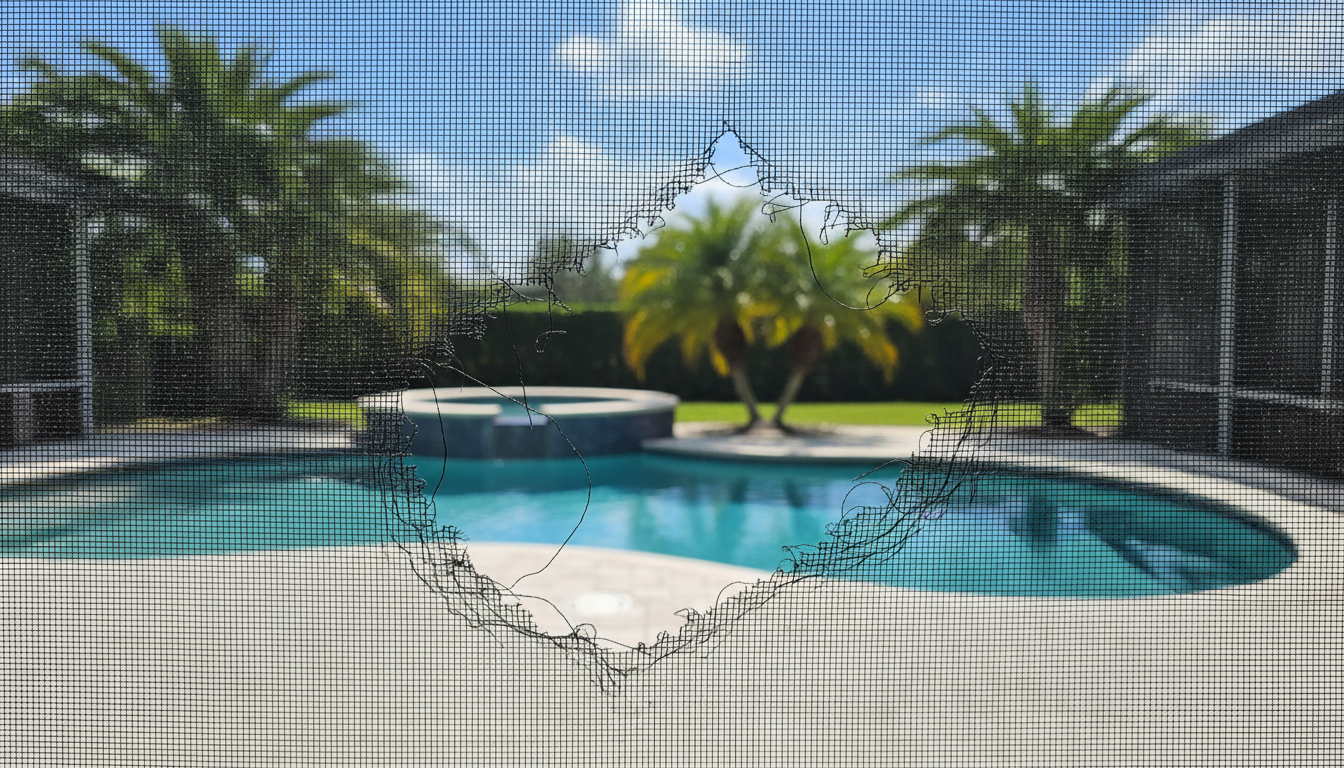
Once the fasteners are verified, focus shifts to the screen mesh itself. In any structural system, the weakest link principle applies; during a hurricane, that link is often a minor puncture or a loose spline. The spline is the rubber cord that locks the mesh into the aluminum groove. If this cord has begun to pull away or roll out of its track, the panel no longer provides uniform tension. Under storm pressure, a loose spline allows the wind to catch the mesh, creating a pocket of high pressure that can rip the panel entirely or, worse, exert enough force to bend the surrounding aluminum members.
Conduct a thorough walkthrough of your enclosure to identify brittle mesh. Over years of exposure to intense Florida UV rays, standard fiberglass screen loses its flexibility and becomes silvered or papery to the touch. This degraded material will shatter under the impact of flying debris or sustained wind gusts. For professional pool screen repair, we utilize Phifer screen products. Phifer is the industry standard in our Central Florida service areas because of its superior tensile strength and UV resistance. Replacing these compromised sections before June is the most cost-effective way to ensure your pool enclosure hurricane preparation Florida strategy holds up when the pressure rises.
Securing the Weakest Links: Doors and Hardware
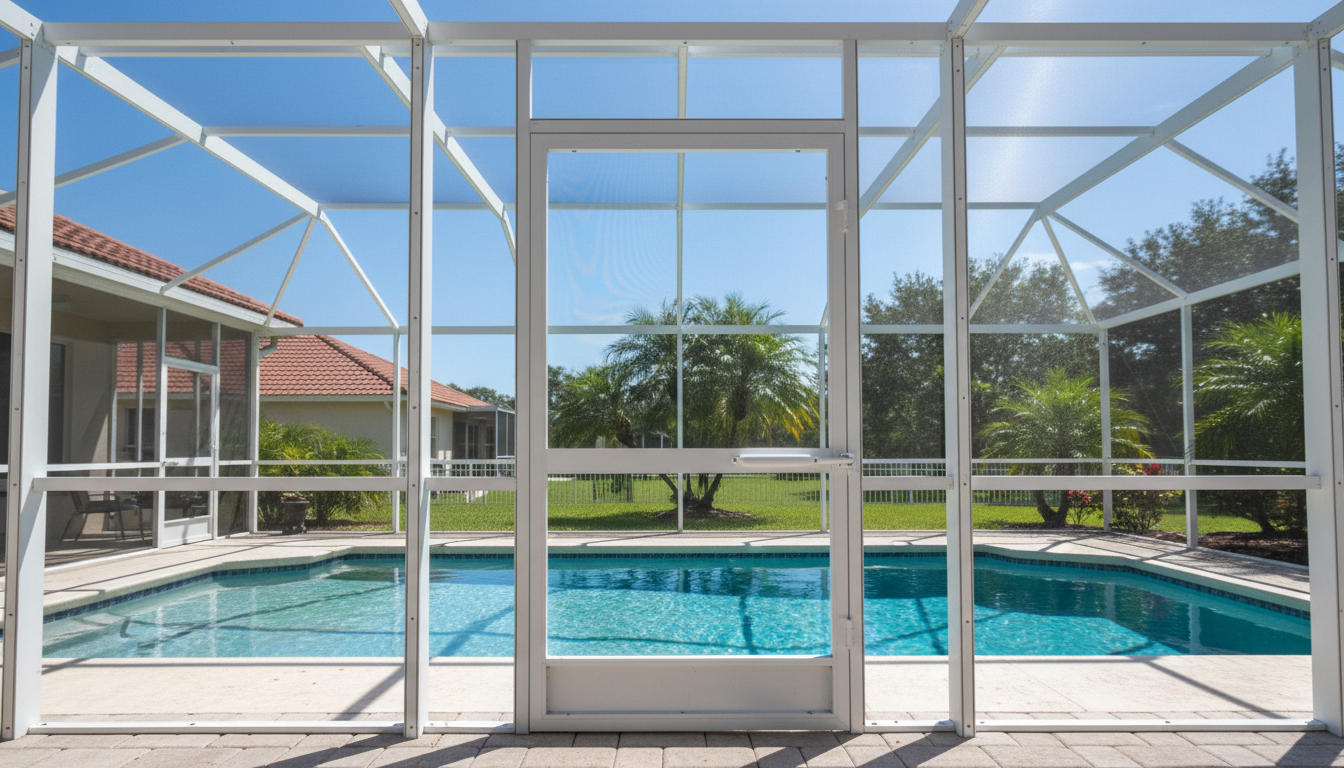
Pool doors represent the largest moving parts of your cage and are frequently the first point of failure during a tropical event. When a door blows open or detaches from its hinges, it allows high velocity air to enter the enclosure, creating internal pressure that can lift the roof panels. Effective pool enclosure hurricane preparation Florida starts with a rigorous assessment of these entry points.
Homeowners should follow this door hardware checklist:
Pneumatic Closers: Verify the closure tube is not leaking hydraulic fluid and has enough tension to pull the door tight against the strike plate. A door that stands even slightly ajar is vulnerable to being caught by a gust.
Latches and Handles: Ensure the latch engages fully without having to jiggle the handle. If the latch sticks or fails to click into place, the vibration from the wind will eventually shake it open.
Hinges: Inspect for corrosion or white rust, which indicates aluminum oxidation. Corroded hinges become brittle and can snap under the torque of a wind-whipped door.
While a well maintained door is your best defense, you can add a layer of security if a major storm is imminent. Driving a temporary self-tapping screw through the door frame and into the jamb will prevent the door from swinging open. However, this is a stopgap measure. For a permanent solution, you should contact our team for an inspection to replace worn hardware. Ensuring these components are functional is a core part of professional pool screen repair in our Central Florida service areas.
Managing the Central Florida Landscape and Debris
Local landscapes in Winter Park and Orlando neighborhoods, such as College Park and Tuskawilla, are defined by their mature Live Oaks and Pines. These trees are beautiful but represent a significant threat during high wind events. Overhanging limbs act as projectiles or heavy weights if they snap and fall. You should trim any branches that extend over the enclosure footprint to prevent impact damage. Maintaining a clear vertical space between your cage and any large limbs reduces the risk of punctures that lead to structural failure.
Debris management extends to the enclosure structure itself. The super gutter, which serves as the primary connection point between your home’s roofline and the pool cage, is often overlooked. In our Central Florida service areas, heavy tropical rains can dump several inches of water per hour. If these gutters are clogged with oak tassels, leaves, or pine needles, they become massive water reservoirs rather than drainage channels.
A clogged gutter can hold hundreds of gallons of water, adding thousands of pounds of static load to the aluminum frame. This immense weight causes the structural members to sag or, in extreme cases, causes the entire enclosure to pull away from the house fascia. Regular cleaning and debris removal are non-negotiable steps in pool enclosure hurricane preparation Florida. If you notice sagging or gaps forming along the roofline, you should contact our team for an inspection to check the integrity of the connection before the next storm arrives.
To Cut or Not to Cut: The Hurricane Screen Debate
Beyond managing external debris, a common point of contention in pool enclosure hurricane preparation Florida is whether to manually cut screen panels to let wind pass through. You may hear advice to cut an 'X' into the mesh to reduce the sail effect. From a professional standpoint, this is a measure of last resort. While creating an opening does alleviate wind pressure on the frame, it guarantees a costly professional pool screen repair bill once the storm passes.
Our team advocates for a repair-first strategy. A cage that is properly braced with tight, secure splines is engineered to withstand significant wind loads without manual intervention. If you are facing a direct hit from a Category 3 hurricane or higher and choose to cut, prioritize the top panels if they can be reached safely, or specific side panels facing the prevailing wind. This should only be done when structural failure is a direct threat. For most tropical events in our Central Florida service areas, maintaining the tension and structural integrity of the enclosure is a far more effective defense than destroying the mesh.
When to Call a Professional: Post Storm Inspections and Pre Season Prep
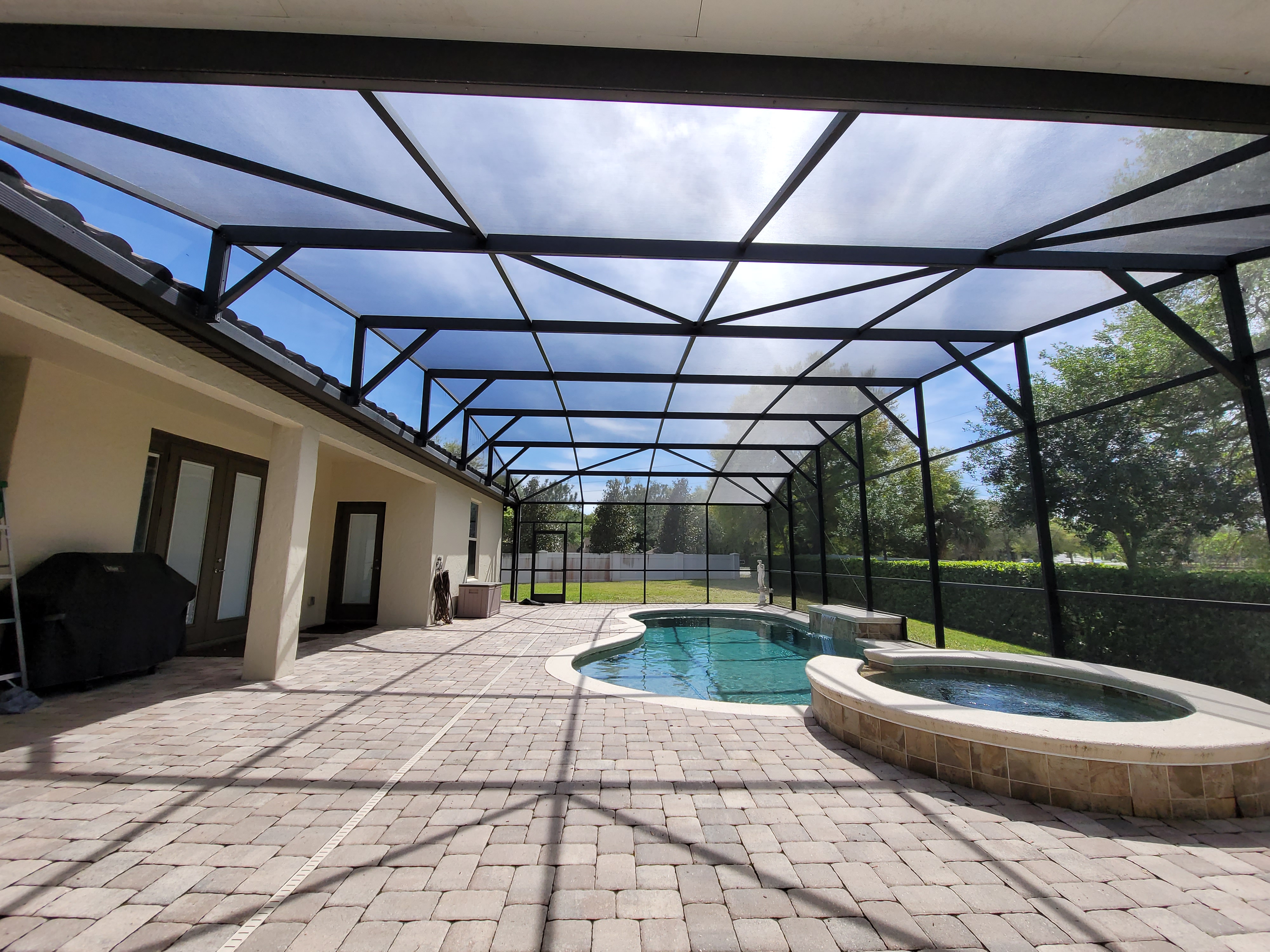
Maintaining a comprehensive pool enclosure hurricane preparation Florida strategy means knowing when to move beyond basic maintenance. Certain structural issues indicate that the frame's integrity is compromised and require professional intervention. Bent aluminum members, particularly the horizontal purlins or vertical uprights, are a primary concern. Once these beams bow or buckle, they lose their ability to resist compression and must be replaced rather than straightened.
Other red flags include slack or snapped stabilization cables and a cage that visibly sways during afternoon thunderstorms. A swaying enclosure often points to failed anchor bolts or wall-plate connections that the average homeowner cannot safely repair. These structural vulnerabilities are why professional pool screen repair is critical for long-term safety.
In our Central Florida service areas, the demand for qualified contractors surges as June 1st approaches. Scheduling a pre-season inspection in March or April allows for necessary reinforcements to be completed before the peak of the tropical season. Screen Worx LLC specializes in these high-level structural reinforcements for Winter Park residents. If you notice signs of frame fatigue or movement, you should contact our team for an inspection to ensure your outdoor space is fully secured against the next major storm.
Taking the time to inspect your pool enclosure now can save you from significant stress and expensive repairs once storm season arrives. By checking for loose panels and structural weaknesses today, you ensure your home is better protected against Florida's unpredictable weather. If you want expert help securing your enclosure or need a professional assessment of your cage, we are here to assist. You can explore our full range of Services to see how we can help you prepare for the next big storm.