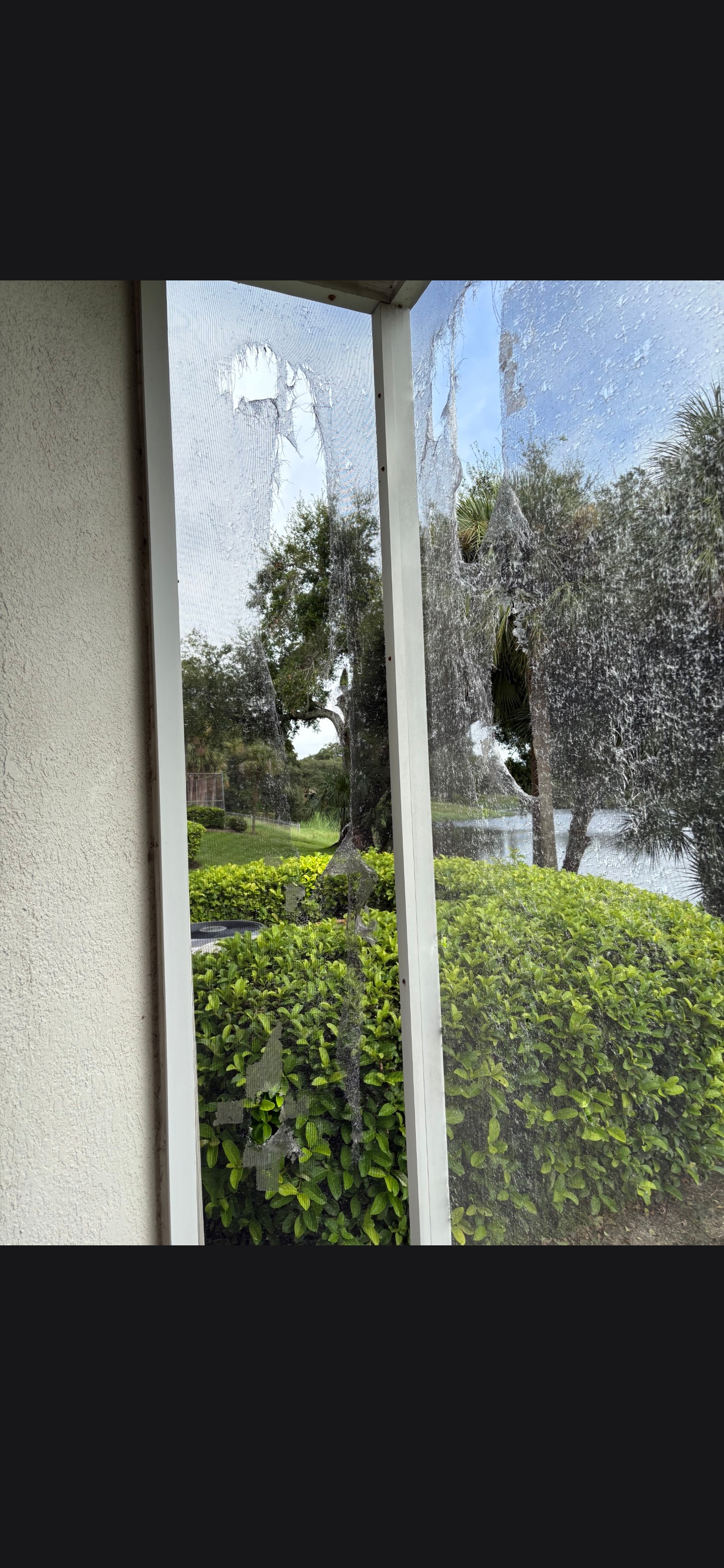
A pool screen torn along the edge typically signifies that the mesh has pulled away from its retaining spline or that the material has weakened from weather and UV exposure. Small tears or loose sections can often be fixed by re-seating the screen with a spline tool, but damaged or brittle panels usually require a full rescreening of that specific section to ensure a secure fit.
Discovering a screen that has pulled away from the frame or torn directly along the spline is a common frustration for Florida homeowners. While a small gap might seem minor, a tear along the edge often signals underlying issues with tension or structural aging. Ignoring these vulnerabilities invites pests into your lanai and compromises the overall integrity of your enclosure during heavy winds. At Screen Worx LLC, we understand that professional maintenance is about more than just aesthetics; it is about protecting your investment. This guide explores the specific mechanics of edge failures and the differences between isolated repairs and full rescreens. You will learn how to identify the root cause of the damage, the potential costs of deferred maintenance, and the precise methods our team uses to restore your pool cage to its peak condition.
The Anatomy of a Pool Screen Panel and Why Edges Fail
Understanding why a pool screen fails requires looking at how it is held together. Every panel in your enclosure consists of three primary components: the extruded aluminum frame, the fiberglass or polyester mesh, and the spline. The spline is a flexible rubber or vinyl cord that professionals roll into a narrow groove in the aluminum. This friction fit is what maintains the precise tension required to keep the enclosure looking tight and functioning correctly.
When we perform pool screen repairs, we categorize damage by its location. A puncture or tear in the center of a panel is typically the result of a direct impact, such as a falling branch, a stray golf ball, or wildlife. However, a pool screen torn along the edge indicates a different set of issues. Unlike impact damage, edge failure is usually structural or age-related. It occurs where the mesh is most vulnerable, which is the point of contact with the metal frame.
An edge tear often presents in two ways. First, the mesh may simply pull out if the spline has shrunk or lost its elasticity, allowing the screen to slip out of the channel under light wind pressure. Second, the material often becomes brittle specifically at the frame line. Because the aluminum frame absorbs and retains significant heat from the Florida sun, the mesh fibers at the edge degrade faster than those in the center. Over time, the screen shears right at the groove, leaving the spline intact while the panel flaps loosely.
Common Causes of Edge Tears in Florida Pool Enclosures
Central Florida presents a unique set of challenges for outdoor structures. While some might attribute failures to simple abrasion, the reality for a pool screen torn along the edge usually involves a combination of intense UV exposure and thermal dynamics. The Florida sun bakes the fiberglass mesh and the vinyl spline daily. This constant heat causes the materials to lose their plasticizers, leading to a brittle texture. Once the screen loses its flexibility, it can no longer stretch to accommodate the natural movement of the enclosure.
A significant factor often overlooked is the thermal expansion of the aluminum frame itself. Metal expands when heated and contracts when it cools. In Winter Park, the temperature of an aluminum beam can fluctuate significantly between a mid-afternoon scorcher and a rainy evening. Because the screen is locked into a fixed channel, this constant micro-movement of the metal puts immense stress on the perimeter of the panel. If the material has already been weakened by UV degradation, the frame essentially shears the screen at the spline line.
Summer storms also play a critical role through wind load tension. During high-wind events, the mesh panels act like sails, pulling hard against the spline. If the spline has shrunk due to age, it may simply pop out. Conversely, if the spline holds firm but the mesh is weak, the panel will tear right along the metal edge.
Maintenance practices can also contribute to premature failure. We often see damage caused by high-pressure cleaning. While keeping the enclosure clean is important, a pressure washer nozzle held too close to the frame can easily dislodge the spline or slice through a weakened screen edge. For homeowners considering new enclosures or significant pool screen repairs, understanding these stressors helps in choosing materials that resist these specific Florida environmental factors. High-quality mesh and professional tensioning are the only ways to mitigate the inevitable effects of the local climate.
Pool Screen Tear Middle of Panel vs Edge Repair: Which is Better?
Homeowners often wonder if a small puncture requires a complete overhaul or a simple fix. When damage occurs in the center of a panel, a DIY patch kit can technically seal the hole. However, these patches are bulky, unattractive, and often peel away after a few weeks of Florida humidity. They serve as a temporary bandage rather than a long term solution. In contrast, when you discover a pool screen torn along the edge, the repair logic changes entirely.
An edge tear is a structural failure that cannot be patched. Because the tear occurs at the point where the mesh enters the aluminum channel, there is no surface area available to bond a patch to the frame effectively. Furthermore, the physics of a screen enclosure depends on tension. The mesh must be pulled tight across the frame to resist wind and prevent sagging. If the edge is compromised, the material lacks the necessary anchor point to maintain that tension.
Professional pool screen repairs for edge damage always involve a full panel replacement. Our technicians must remove the old, brittle spline and the failing mesh entirely. We then clean the aluminum groove to ensure no grit or old rubber remains to interfere with the new seal. By rolling in new, high quality mesh and fresh spline, we restore the drum-like tightness that a patch simply cannot provide. This method is the only way to ensure the panel remains secure during heavy winds and keeps local pests out of your outdoor living space.
Does a Torn Edge Mean You Need a Full Rescreen?
Finding a pool screen torn along the edge does not automatically mean every panel needs replacement, but it serves as a crucial diagnostic signal. Homeowners should perform a simple touch test on the surrounding mesh. If the screen feels brittle or leaves a dark, charcoal like residue on your fingertips, the fiberglass has likely reached the end of its functional life. In Central Florida, standard mesh typically has a lifespan of seven to ten years before UV degradation compromises its structural integrity.
Observe the spline in other sections of the enclosure. If you see the rubber cord backing out of the channel in multiple spots, it indicates that the entire system is failing at once. At this stage, choosing individual pool screen repairs can become less cost-effective than a full rescreen. While a single panel fix addresses the immediate opening, an aging enclosure will likely suffer another tear during the next heavy wind. A professional assessment helps determine if the cage is a candidate for a full restoration, which often includes updating fasteners or custom aluminum work to ensure the frame remains secure. Investing in a full rescreen when the material is past its prime prevents the frustration of recurring, piecemeal repairs.
The Real Cost of Ignoring Edge Tears
Ignoring a pool screen torn along the edge introduces mechanical risks that go far beyond aesthetics. When the mesh separates from the frame, it loses its ability to distribute wind pressure across the enclosure. The loose material begins to flap violently during Central Florida afternoon storms, acting as a whip against the surrounding structure. This repetitive motion can actually wallow out or bend the internal spline channel. If the aluminum groove becomes distorted, a standard panel replacement may no longer be possible without specialized custom aluminum work to restore the frame integrity.
Local pests in Winter Park are remarkably efficient at finding these perimeter gaps. While a center tear might be missed, a gap at the frame line provides a direct highway for no-see-ums and predatory wasps. Mud daubers, in particular, often use these openings to access the underside of your roofline, creating unsightly nests that are difficult to remove without damaging the mesh further.
From a financial perspective, deferred maintenance is always more expensive. While individual pool screen repairs for a single panel typically range from $75 to $150 depending on the size and height, leaving the edge torn allows the wind to put undue stress on adjacent panels. This often leads to a domino effect where one failed edge leads to three or four more, significantly increasing the total restoration cost.
How Professional Repair Works for Edge Damage
Addressing a pool screen torn along the edge requires a systematic approach to ensure the new panel maintains its structural integrity under Florida's heavy wind loads. At Screen Worx LLC, our process begins with the complete removal of the old, degraded spline and any remaining fiberglass filaments. Unlike many DIY attempts that try to force new material over old debris, we take the time to thoroughly clean the aluminum groove. This step is critical; removing built up grit and oxidation ensures the new spline achieves a maximum friction fit, which is the primary defense against future slippage.
We exclusively use high quality Phifer mesh, which is engineered to withstand the intense UV exposure common in Winter Park. During the installation, our technicians use professional grade rolling tools to seat the spline. This stage requires a calibrated hand; the screen must be pulled tight enough to eliminate sagging, yet not so tight that it creates excessive stress on the aluminum frame. Proper tensioning is what differentiates a professional job from a home remedy. A correctly tensioned panel will stay taut rather than flap, providing the necessary resilience to remain secure during a severe Florida thunderstorm. This level of precision ensures that standard pool screen repairs or complex custom aluminum work result in an enclosure that remains a functional, pest free barrier for years.