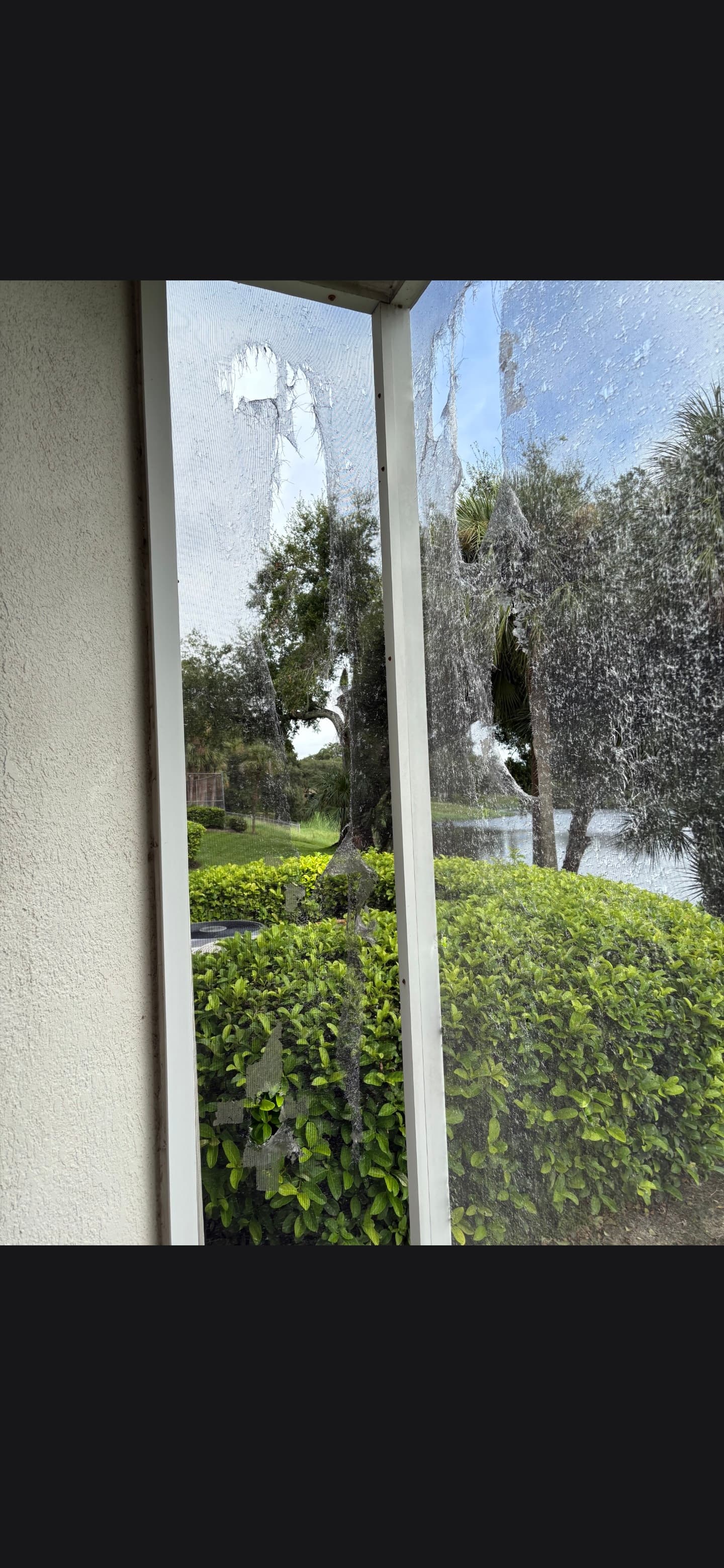
Hurricane season in Florida runs through November 30, and even when a named storm misses us, Central Florida still gets plenty of strong afternoon thunderstorms and windy fronts. When the wind dies down, most people check the roof, pick up the branches, and move on. The pool enclosure usually gets a quick look from the kitchen window, and that's about it.
I'd ask you to give it ten minutes instead. Storm damage on a pool screen often starts small: one panel pulled loose, a little tear near the bottom, a screw backed out. Left alone, the next windy day can turn that one panel into several. Here's the walk-around I'd do on my own enclosure.
First, stay safe
Before you go out there, look for downed power lines, hanging limbs, and anything still loose overhead. If a tree or a big limb is lying on the enclosure, or a section of frame is visibly bent or leaning, stay out from under it. Don't climb on the enclosure, and don't try to pull a heavy branch off the top by yourself. Panels and frame can shift once the weight comes off.
If everything looks stable, grab your phone and start walking.
Minutes 1 to 3: Walk the outside
Start outside the cage and go all the way around. You're looking at the big picture here:
Is anything leaning or out of line? Sight down the long walls and the roof line. Straight lines should still look straight.
Is anything lying on the screen? Palm fronds, branches, and patio furniture from next door all end up on pool cages.
Are any panels flapping? A panel that's moving in a light breeze has usually come loose from its frame.
Is there debris blown into the screen at the bottom? Leaves and sticks pile up against the lower panels and can hide damage.
Take a wide photo of each side as you go. It takes seconds, and it gives you a record of how things looked right after the storm.
Minutes 4 to 10: Look at the frame and the doors
The aluminum frame is what holds everything up, so give it a good look:
Bent or kinked members. Look for any piece that's bowed or creased, especially where a branch hit.
Loose or missing screws. Look at the joints and where the frame meets the house and the deck.
The screen door. Open and close it. Does it still latch? Does it drag, or does it close by itself like before? A door that suddenly sticks can mean something shifted.
What to do with what you find
If everything looks good, you're done. Get the debris off the deck and enjoy the pool.
If you found a torn or loose panel, don't wait for the next storm to make it worse. Take a photo of the whole panel and a close-up of the damage, and send them to me through the contact page at screenworxllc.com. From photos I can usually tell what's going on before I ever come out.
A couple of things worth knowing about how I fix storm damage:
I don't patch holes. If a panel is torn, I replace the whole panel with new mesh and new spline. It looks right and it holds up.
I can almost always match your existing screen. My standard is Phifer® 18x14 fiberglass mesh. Some builder or previous-owner meshes are specialty screens and cost about twice as much, but I'll work with you on that if it comes up.
You don't have to be home. I just need community access, like a gate code or a heads-up to the guard, and a way into the enclosure, such as an unlocked fence gate.
After a big storm, get in line early
Estimates are free, and I usually have yours ready within 24 hours, or about 2 days for bigger projects. Most repairs get done within a few days. After a hurricane comes through, though, a lot of folks around Orlando need screen work at the same time, and it can take longer. The sooner you send me photos, the sooner you're on the list.
I'm based in Winter Park and work all around the greater Orlando area. If the last storm left your pool screen torn, loose, or sagging, send me a few photos through the contact page at screenworxllc.com for a free estimate, and I'll take a look.
Evan, Screen Worx LLC