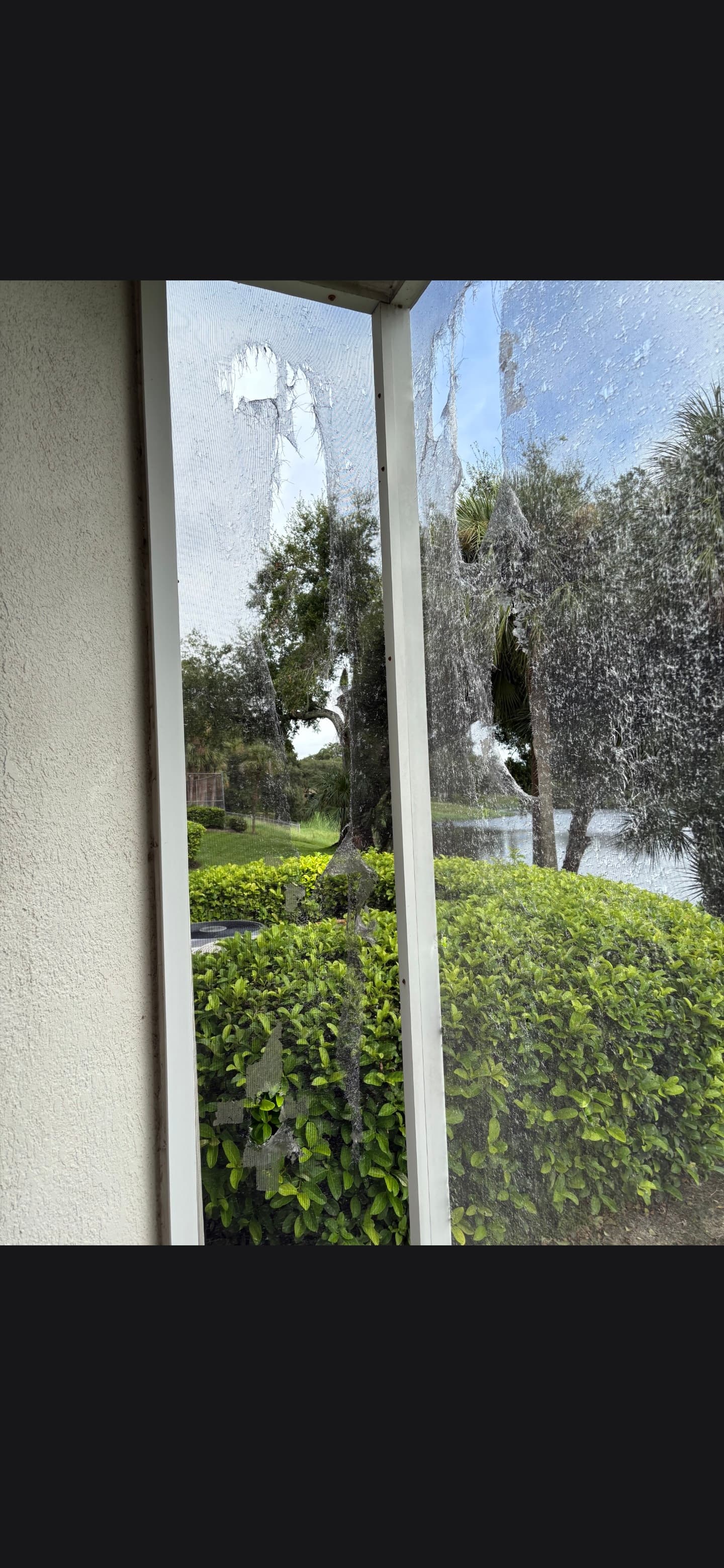
When I replace a panel or rescreen a cage, most people expect me to just put "screen" back in. That's fine for a lot of homes. But there's more than one kind of mesh, and the right one depends on who uses your pool, what's buzzing around your yard, and how close your neighbors are.
Here's how I walk homeowners through it, in plain terms.
Standard screen: the everyday choice
My standard screen is Phifer 18x14 fiberglass. The "18x14" just describes the weave, meaning how many strands run each way per inch. It's what most pool cages around Winter Park and Orlando already have.
It's a good all-around screen. It keeps out mosquitoes and most flying bugs, lets the breeze through, and you can see out without much haze. If nobody is pushing on your screens and tiny bugs aren't a big problem, standard is usually the right call.
Good for: most pool cages, matching existing panels, keeping cost down.
Pet screen: for low panels that take a beating
If you've got a dog that leans on the screen, a cat that climbs, or kids who run into the walls, standard fiberglass is going to tear sooner or later. Pet screen is a much thicker, tougher mesh made to hold up to claws and bumps.
You don't have to do the whole cage in it. A lot of the time I only put pet screen on the bottom row of panels, where the dog actually is, and keep standard screen up high. You get the strength where you need it without changing how the whole enclosure looks.
The trade-off is that pet screen is a bit heavier and a little less see-through than standard. Down low, most people never notice.
Good for: bottom panels, screen doors, homes with dogs or cats.
No-see-um mesh: when the little bugs get through
If you sit out by the pool in the evening and still get bitten, you may be dealing with no-see-ums. They're tiny biting midges, and they can slip right through a standard weave, especially near water and around dusk.
No-see-um mesh has a tighter weave that keeps them out. You still get your view and a breeze, though the tighter weave does let a little less air through than standard. For people who spend their evenings on the lanai, it's often worth it.
Good for: evening use, homes near lakes, ponds or wooded areas, anyone tired of getting bitten in their own backyard.
Privacy screen: for the side that faces the neighbors
Privacy screen cuts down how much people can see from outside, while still letting light and some air in. It's popular on the side of the cage that faces a neighbor's yard, a street, or a second-story window.
Like pet screen, it doesn't have to be all or nothing. I'll often do one or two walls in privacy screen and leave the rest standard so you keep your view of the yard. Keep in mind it does block more airflow than standard, so I don't usually suggest wrapping the whole cage in it.
Good for: lanais, patios and balconies that face neighbors or a street.
TuffScreen: when you want heavy duty
TuffScreen is a heavier-duty screen than standard fiberglass. People choose it when they want something that stands up better to everyday wear and tear than regular screen does. It's a nice middle ground if you want more toughness across a bigger area without going to pet screen everywhere.
Good for: high-traffic areas, entryways, anyone who wants a sturdier screen overall.
Can I mix types on one cage?
Yes, and I often recommend it. Every panel is its own piece of mesh in its own frame, so each one can get a different screen. Some common mixes I see:
Pet screen on the bottom row, standard above. The most popular one for dog owners.
Privacy screen on one wall, standard on the rest. Privacy where you need it, view everywhere else.
No-see-um on the whole cage. For folks who are outside every evening.
When I'm only replacing a few panels, I'll match what you have so the cage looks right. If you're doing a full rescreen, that's the best time to rethink what goes where.
A few questions to ask yourself
Before you call, think about these:
Who's using the pool area? Pets and kids push on screens. That points to pet screen down low.
When are you out there? Evenings near water point to no-see-um mesh.
What can the neighbors see? That might mean privacy screen on one side.
How much breeze do you want? Tighter and heavier screens trade a little airflow for what they give you.
You don't have to have the answers figured out. I'll go over it with you when I come out.
Let's figure out what fits your cage
Whether it's one torn panel or a full rescreen, I'll look at your enclosure, ask how you use it, and tell you straight which screen makes sense and which doesn't. No upsell. Estimates are free, and you pay after the job is done. My work comes with a 1-year workmanship guarantee.
I'm based in Winter Park and work all around the Orlando area. Call or text me at 407-765-8400, and if you can, send a photo of your cage. I'll help you pick the right screen.
Evan, Screen Worx LLC